


The Magic of True Co-op: Playing Side-by-Side
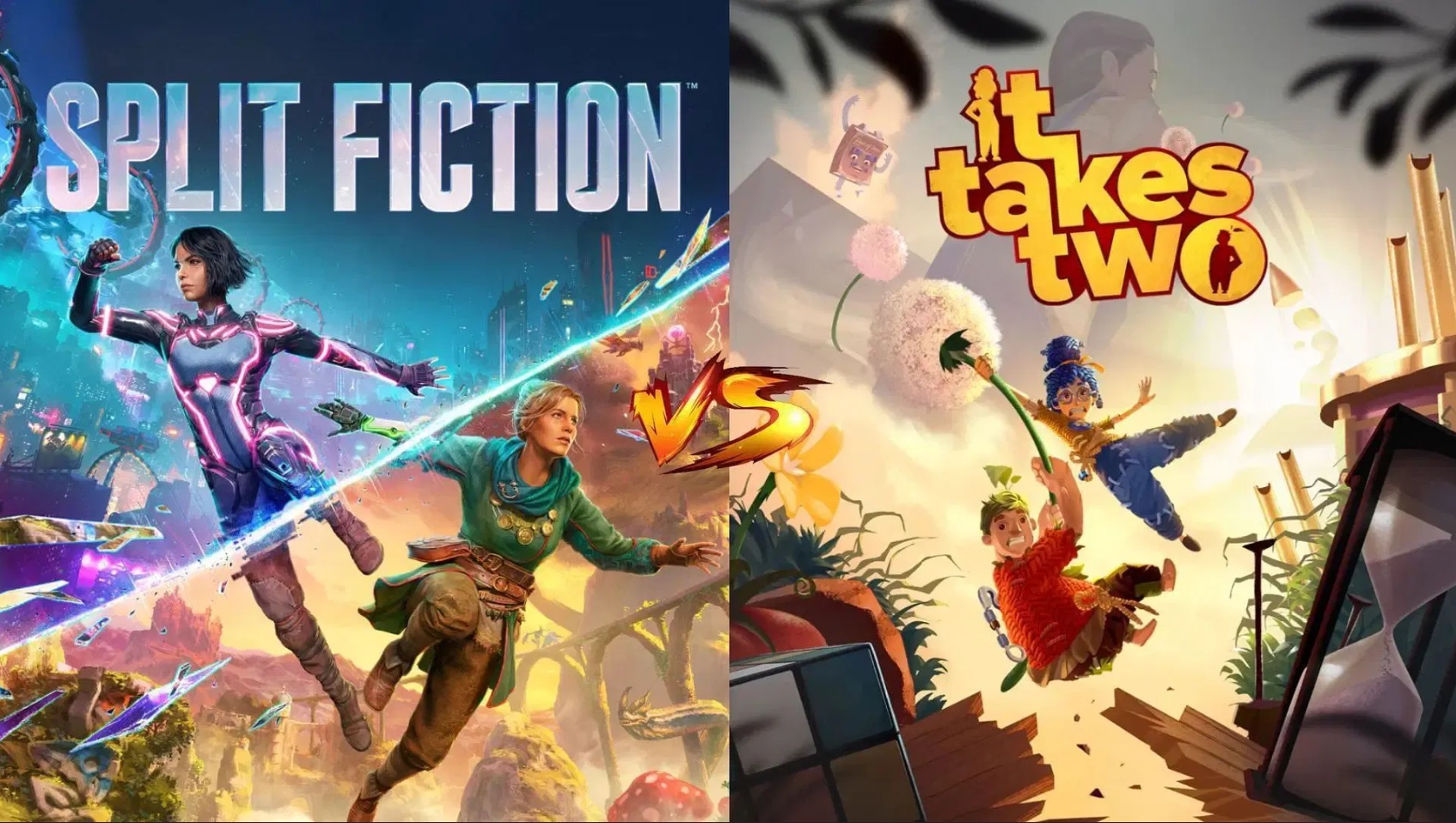
Most games with a “co-op mode” just let two people exist in the same space, doing their own thing next to each other. True co-op is different: neither player can actually finish without the other, the game is designed so you have to talk, plan and cover each other to get anywhere at all, whether that means solving the same puzzle from two angles or simply not falling off the same cliff together. That’s the specific thing It Takes Two and Split Fiction do so well, and it’s the thing worth chasing whether you’re after games similar to It Takes Two and Split Fiction in general, or games like It Takes Two and Split Fiction on a specific platform, not just another game with a two-player option bolted on.
This guide covers both games in full, the fresh alternatives that actually add something new to the picture, and honest pointers to two genre staples, Portal 2 and Unravel Two, that already have their own dedicated write-ups on this site rather than being repeated here for a third time.
What Makes It Takes Two a Co-op Masterpiece?
At a Glance
Genre: Action / Adventure
Co-op Type: Mandatory local or online, 2 players
Platforms: PC, PlayStation, Xbox, Switch
Price: $$$
Why You’ll Love It
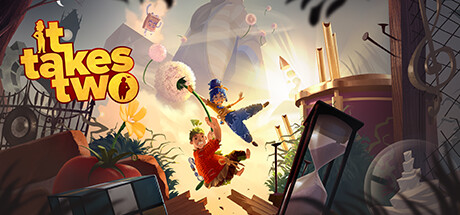
Its trick is asymmetry: in almost every chapter, you and your partner get genuinely different tools, one of you might control fire while the other controls water, one might fly while the other teleports, so neither of you is doing the other’s job, you’re solving one puzzle from two different angles at once. That constant reinvention, a new mechanic and a new toy-sized world every chapter, is why it’s the benchmark this whole genre gets measured against, on top of an honest story about Cody and May repairing a marriage that’s falling apart.
What Makes It Special
- Genuinely asymmetrical abilities in nearly every chapter, not repeated tools
- A new mechanic and a new miniature world almost every chapter
- Mandatory two-player, no solo mode, full commitment to the format
- Won Game of the Year at The Game Awards 2021
Keep in Mind
No solo mode and no way to sample it alone first, you’ll need a partner free before you can even start.
Split Fiction: Hazelight’s Next Genre-Bending Adventure
At a Glance
Genre: Action / Adventure
Co-op Type: Mandatory local or online, 2 players
Platforms: PC, PlayStation, Xbox
Price: $$$
Why You’ll Love It
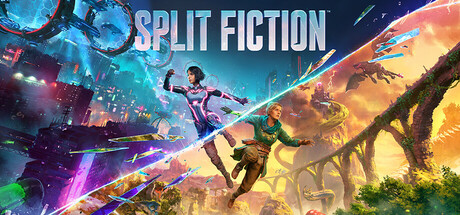
From the same studio and director, Josef Fares, as It Takes Two, Split Fiction sends two writers physically trapped inside their own unpublished stories, one sci-fi, one fantasy, and every chapter swaps genre entirely, a spaceship chase one moment, a dragon-back flight the next. Where It Takes Two’s asymmetry comes from fixed roles per chapter, Split Fiction leans harder into constant tonal whiplash, the fun is not knowing what kind of game you’ll be playing ten minutes from now.
What Makes It Special
- Genre shifts constantly, sci-fi to fantasy and back, chapter to chapter
- Free Friend’s Pass with crossplay, only one of you needs to own it
- From the same director as It Takes Two, an even bigger scope
- Full local split-screen and online support
Keep in Mind
Not currently on Nintendo Switch, PC, PlayStation and Xbox only, worth checking before you buy if Switch is your only platform.
Hela: Of Mice & Magic – A New Kind of Wholesome Partnership

At a Glance
Genre: Adventure / Puzzle
Co-op Type: 1 Solo / 2 Local / Up to 4 Online
Platforms: PC, PlayStation 5, Xbox Series X|S, Nintendo Switch 2
Release Window: December 1, 2026
Why You’ll Love It
Where It Takes Two and Split Fiction ask you to fight, chase and dodge your way through a story, Hela: Of Mice & Magic asks you to slow down instead. Two mice, an adventure playground drawn from the woods of northern Sweden, and Froggy, a magical frog backpack that turns climbing and swinging into a physics puzzle built for patience rather than reflexes. There’s no weapon in the game, every obstacle gets solved through cooperation and timing, not combat.
It’s also built solo-first in a way neither Hazelight game is: the Shade System hands a single player a controllable magical companion instead of requiring a second person, so the adventure works on its own before local split-screen or online co-op adds a real partner, for up to four total, whenever you want one.
What Makes It Special
- An adventure playground built for exploration, no combat anywhere
- Froggy, the magical frog backpack, drives every traversal and puzzle
- Playable solo via the Shade System, not mandatory two-player like It Takes Two or Split Fiction
- Scales from one player to four without changing what the game is
Keep in Mind
Hela: Of Mice & Magic is releasing on December 1, 2026, so it isn’t out yet. It’s wishlistable on Steam now, worth adding to your list before it launches rather than after.
Wishlist Hela: Of Mice & Magic Now
Top Co-op Puzzle Games for Shared Brainpower
Two picks for players who most loved working through a problem together, not just moving through a story together.
Chained Together
At a Glance
Genre: Platformer
Co-op Type: Online, up to 4 players
Platforms: PC
Price: $
Why You’ll Love It
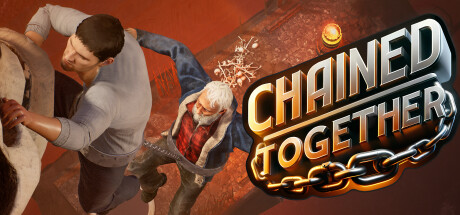
You and up to three friends are physically chained together, climbing out of hell one treacherous cliff face at a time, and every fall drags the whole group down with you, sometimes literally over the edge you’d all just fought to reach. It’s less about clever puzzle logic than about the comedy of shared consequences, one bad jump is everyone’s problem, which makes it a distinctly different flavour of “working together” than the narrative co-op games above.
What Makes It Special
- Extremely cheap, one of the least expensive picks in this whole genre
- Up to four players sharing one physical chain and one shared fate
- Comedy through shared consequence rather than puzzle logic
- Short, chaotic sessions, easy to fit into one evening
Keep in Mind
Online only, no local couch option, and it’s properly difficult, worth knowing if you wanted something gentler.
View Chained Together on Steam →
Portal 2 also belongs in this category, its co-op campaign hands each player a portal gun and demands constant coordination through puzzles flatly impossible to solve alone. We’ve covered it in full elsewhere on our co-op recommendations, so here it’s simply worth naming as one of the strongest puzzle-first picks in the genre.
Charming Co-op Platformers with Heart
One fresh pick, and one honest pointer elsewhere for the other genre staple.
Sackboy: A Big Adventure
At a Glance
Genre: Platformer
Co-op Type: Local and online, up to 4 players
Platforms: PC, PlayStation
Price: $$$
Why You’ll Love It
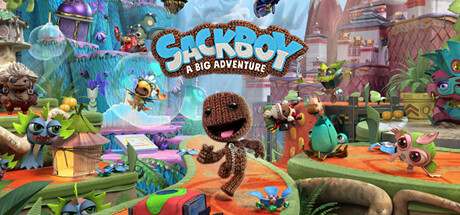
A colourful, LittleBigPlanet-flavoured platforming adventure with up to four Sackpeople bouncing, dashing and grabbing their way through handcrafted levels built from felt, cardboard and everyday materials, in the same visual tradition as the series it spun out of. It’s friendlier and less demanding than It Takes Two or Split Fiction, no fixed asymmetrical roles, everyone plays the same character type with the same moveset, making it an easier entry point for a family or a less experienced group where nobody wants to be stuck learning a role nobody else has.
What Makes It Special
- Up to four players, more forgiving than a strict two-player structure
- Charming, handcrafted level design throughout
- Accessible difficulty, a good entry point for newer players
- Local and online support
Keep in Mind
Not on Xbox or Nintendo Switch, PC and PlayStation only, worth checking your platform before buying.
View Sackboy: A Big Adventure on Steam →
Unravel Two is the other genre staple here, two small yarn creatures physically tethered together, solving gentle platforming puzzles through patient timing rather than combat. It’s had a full write-up on our site already, so rather than repeat it, it’s worth knowing it exists if the “physical connection as the core mechanic” idea appeals to you.
Narrative-Driven Adventures for Two
A Way Out is the clear reference point here, a two-player-only prison break shown in permanent split-screen even online, where the narrative itself functions as the co-op mechanic, different roles, different choices, one shared outcome. It’s also had a full write-up elsewhere on our site, worth knowing that if the “story built specifically for two people” idea is what draws you to It Takes Two and Split Fiction more than the puzzles do.
Key Ingredients of an Unforgettable Co-op Game
Across every game on this list, and the sibling pieces covering the ones repeated here, a few things separate a real co-op game from a multiplayer mode with a co-op label stuck on it, worth knowing before you buy the next one on faith alone.
Co-op as the core mechanic, not an add-on. It Takes Two, Split Fiction and Hela are all built from the ground up assuming two people (or, in Hela’s case, built to work either way from the ground up). The puzzles simply don’t function with one player short, or, for Hela specifically, the Shade System exists precisely because the designers thought through the solo case rather than bolting a workaround on afterwards. Compare either approach to a game that’s “playable in co-op” but designed for solo play first, the difference shows immediately in how much the game actually needs you to talk to your partner rather than just tolerating their presence.
Mechanics that demand real communication. Chained Together forces it through shared physical consequence, one bad jump and everyone falls. Portal 2 forces it through split information, one player often can’t see the solution the other is holding. It Takes Two and Split Fiction force it through asymmetrical roles, one tool each, neither optional. Different tools, same underlying design principle: if you could mute your partner and still finish the game, it isn’t really co-op.
Smart checkpointing and readable UI for both players. A good co-op game never lets one player’s mistake erase the other’s progress unfairly, restarting an entire section because of one person’s slip is a fast way to sour a co-op session. It also always makes it obvious to both people what’s happening on screen, even when the two views are completely different, exactly the kind of detail Split Fiction’s constant genre-swapping has to get right or the whole format falls apart into confusion rather than chaos-with-a-point.
An honest reason to own the game together. Sackboy’s local and online support, It Takes Two and Split Fiction’s Friend’s Pass options, and Hela’s flexible one-to-four scaling all solve the same practical problem from different angles: making sure the cost or setup of playing together isn’t the thing standing between you and actually starting.
Where to Find Your Next Co-op Adventure
Platform availability varies more across this list than the “co-op games” label would suggest, a practical detail most competitor lists for this search skip entirely. Worth checking before you commit to a pick, especially if you and your co-op partner don’t own the same console.
PC: Every game mentioned here is available on PC, no exceptions, the one platform that guarantees the full list.
PlayStation: It Takes Two, Split Fiction, Sackboy: A Big Adventure, Portal 2, Unravel Two and A Way Out are all available. Sackboy in particular started life as a PlayStation-first title, so it’s the platform where it’s most at home.
Xbox: It Takes Two, Portal 2, Unravel Two and A Way Out are available. Split Fiction and Sackboy: A Big Adventure are not currently on Xbox, worth double-checking before recommending either to an Xbox-only friend.
Nintendo Switch: It Takes Two and Unravel Two are both on Switch. Split Fiction, Sackboy: A Big Adventure and Chained Together are not, a real gap if Switch is your only platform. Hela: Of Mice & Magic is confirmed for Nintendo Switch 2 specifically at launch, worth knowing if you’re holding out for the newer hardware rather than the original Switch.
Building Connections Through Shared Play
What all of these games share, whatever their genre, is that the cooperation itself is the point, not a mode layered on top of a game that would work fine solo. It Takes Two and Split Fiction do it through constant reinvention and asymmetrical roles, Chained Together through shared chaos and shared consequence, Portal 2 through split information neither player can act on alone, Sackboy through friendly accessibility for a bigger group, and Hela: Of Mice & Magic through patient, timer-free exploration where even a solo player is never quite alone either.
None of that variety is a weakness in any of them. A great co-op game doesn’t need to look like It Takes Two to earn a place on a list built around it, it just needs to genuinely require the second player rather than merely allowing one.
If what drew you to It Takes Two and Split Fiction was the partnership itself, more than the pace or the pyrotechnics, Hela: Of Mice & Magic is worth wishlisting for its December 1st 2026 release date, a game built around the same principle from the ground up, just aimed at a calmer kind of adventure.
What’s your favourite co-op game? Let us know in the comments below.