


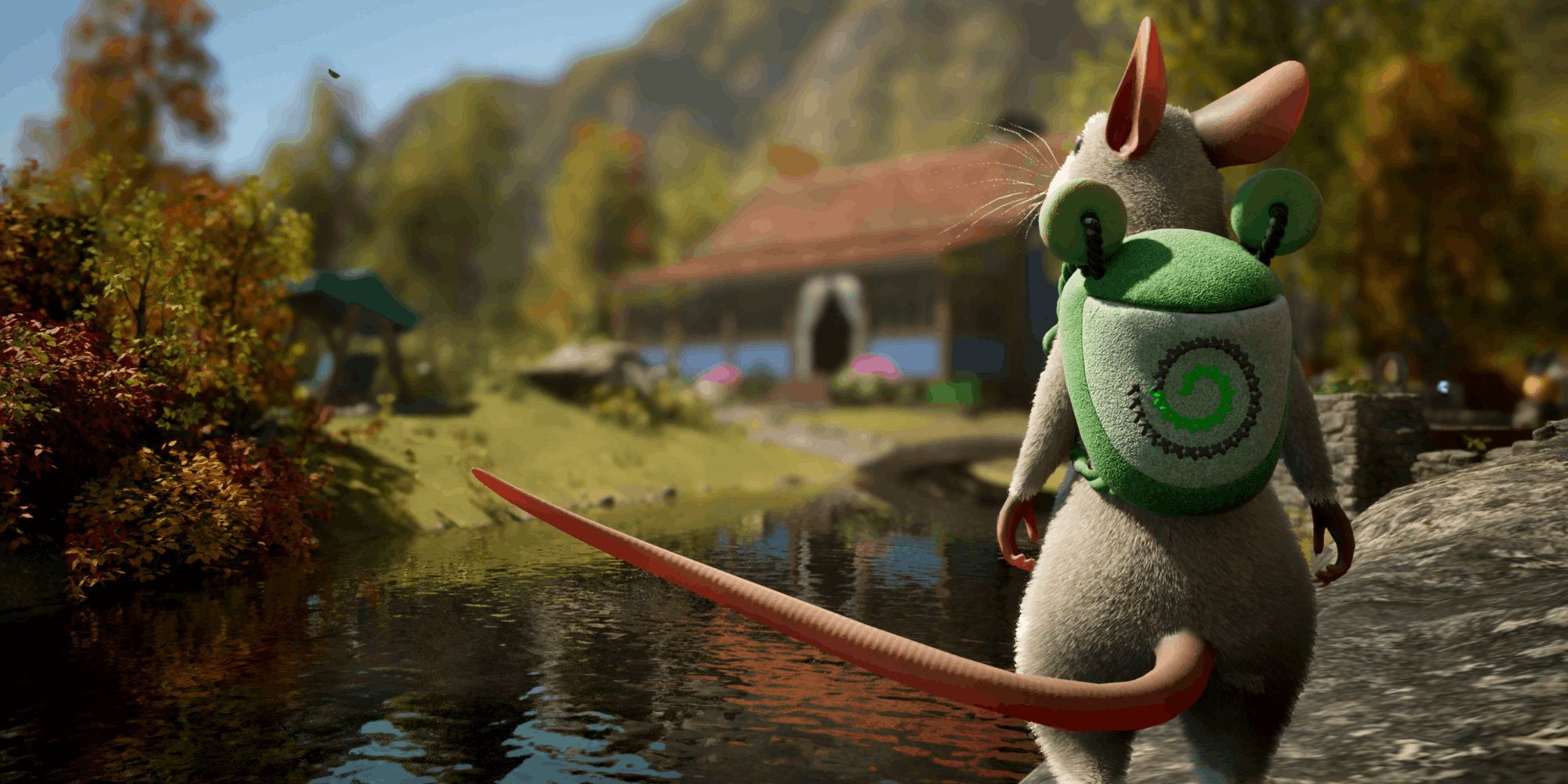
The Joy of Playing Indie Games Together
Some of the best multiplayer memories don’t come from huge online worlds or competitive matches. They come from figuring something out together, getting completely lost, surviving a ridiculous situation, or discovering a strange new world with someone beside you.
That’s where indie games often shine. Smaller studios can experiment with unusual mechanics, distinctive art styles, personal stories, and completely different ideas about what cooperation can look like. One game might ask you to build and explore together, while another depends entirely on communication, timing, or simply keeping each other alive.
For this guide, we’re looking beyond review scores to find the best co-op indie games to actually play together. We’ve considered how cooperation works, how many people can play, local and online options, platform availability, accessibility, and, most importantly, how enjoyable each game is to share with someone else.
The Best Co-op Indie Games at a Glance
Looking for something specific? Here’s a quick comparison of our favorite co-op indie games, including how many people can play, whether you can team up locally or online, and what kind of shared experience each game offers.
| Game | Players | Co-op Type | Best For |
| ⭐ Hela: Of Mice & Magic | 1–2 local / up to 4 online | Local + Online | Wholesome exploration |
| Risk of Rain 2 | 1-4 | Online | Fast-paced action |
| Cult of the Lamb | 1–2 | Local | Action + management |
| Core Keeper | 1–8 | Online | Exploration + building |
| Sea of Stars | 1–3 | Local | RPG fans |
| Abiotic Factor | 1–6 | Online | Survival + crafting |
| Chained Together | 1–4 | Local + Online | Chaotic teamwork |
| PEAK | 1–4 | Online | Climbing adventures |
| PICO PARK 2 | 2–8 | Local + Online | Group coordination |
| Keep Talking and Nobody Explodes | 2+ | Local / Remote | Communication |
| Haven | 1–2 | Local | Couples |
| Pode | 1–2 | Local | Relaxing puzzles |
| Spiritfarer | 1–2 | Local | Relaxing adventures |
| We Were Here Forever | 2 | Online | Puzzle solving |
| The Past Within | 2 | Cross-platform co-op | Puzzle solving |
| BOKURA | 2 | Local + Online | Perspective puzzles |
| PlateUp! | 1–4 | Local + Online | Group chaos |
| Lovers in a Dangerous Spacetime | 1–4 | Local | Small groups |
| Ultimate Chicken Horse | 1–4 | Local + Online | Competitive chaos |
| Knights and Bikes | 1–2 | Local + Online | Wholesome adventure |
| KeyWe | 1–2 | Local + Online | Communication |
| Bread & Fred | 1–2 | Local + Online | Cooperative climbing |
| Blanc | 1–2 | Local + Online | Gentle adventure |
| River Tails: Stronger Together | 1–2 | Local | Platforming + teamwork |
A quick note: Player counts, online features, and platform availability can differ between versions, so we’ll highlight any important differences in the individual recommendations below.
Our Favorite Co-op Indie Games to Play
The best co-op indie games aren’t simply the ones with the highest review scores or the biggest player counts. What matters is whether playing together genuinely adds something to the experience.
For this list, we’ve chosen games that make cooperation feel meaningful, whether you’re solving problems together, exploring unfamiliar worlds, building something from scratch, or desperately trying to stop everything from going wrong. We’ve also considered who each game is best suited for, how many people can play, whether co-op is local or online, and how easy it is for players with different experience levels to join in.
From thoughtful adventures for two to chaotic multiplayer challenges for a whole group, these are the indie co-op games we’d recommend when you’re looking for something genuinely worth sharing.
⭐ Editor’s Choice
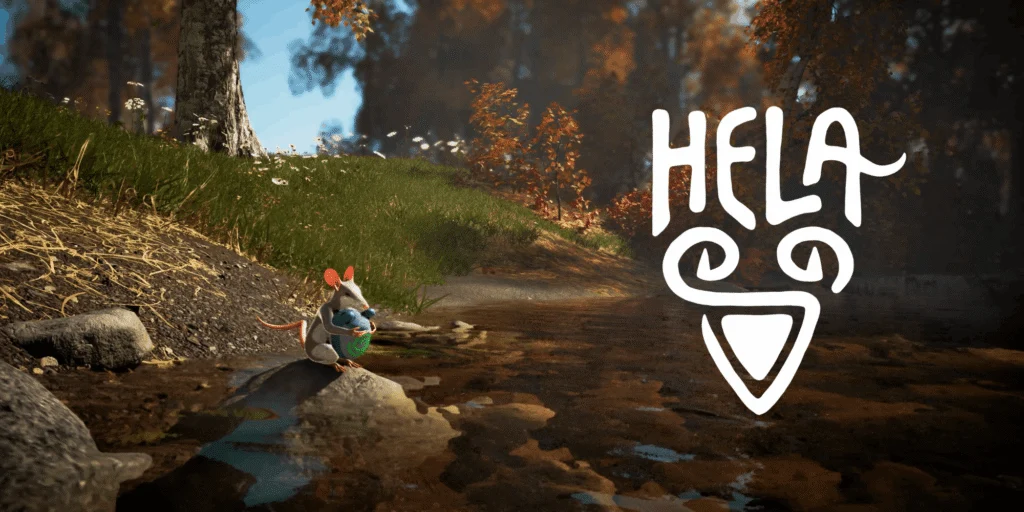
1. Hela: Of Mice & Magic
At a Glance
Players: 1–2 local / up to 4 online
Co-op: Local split-screen + online
Platforms: PC, PlayStation 5, Xbox Series X|S, Nintendo Switch 2
Release: December 1, 2026
Best for: Exploration, puzzles, and wholesome cooperative adventure
Why You’ll Love It
Hela: Of Mice & Magic is an upcoming co-op adventure built around curiosity, exploration, and creative problem-solving. Playing as a tiny mouse in a Scandinavian-inspired world, you’ll navigate environments that feel enormous from your miniature perspective, uncover hidden paths, and work together to solve environmental puzzles.
For local players, Hela supports two-player split-screen, while online co-op expands the adventure to four players. The overall design is approachable rather than punishing, making it a strong choice for players who want teamwork and discovery without constant pressure.
What Makes It Special
Hela’s standout mechanics give its co-op experience a distinct identity. Froggy, your magical backpack, can be used to interact with the environment and tackle puzzles in inventive ways, while the Shade System lets solo players switch between magical companions and experience some of that cooperative problem-solving on their own.
The game has also already earned recognition ahead of launch, winning the gamescom 2025 Awards for Most Entertaining and Most Wholesome.
Keep in Mind
Hela: Of Mice & Magic is still upcoming, with release currently planned on December 1, 2026, so this is a game to wishlist rather than play today.
Local split-screen supports up to two players, while groups of three or four will need to play online.
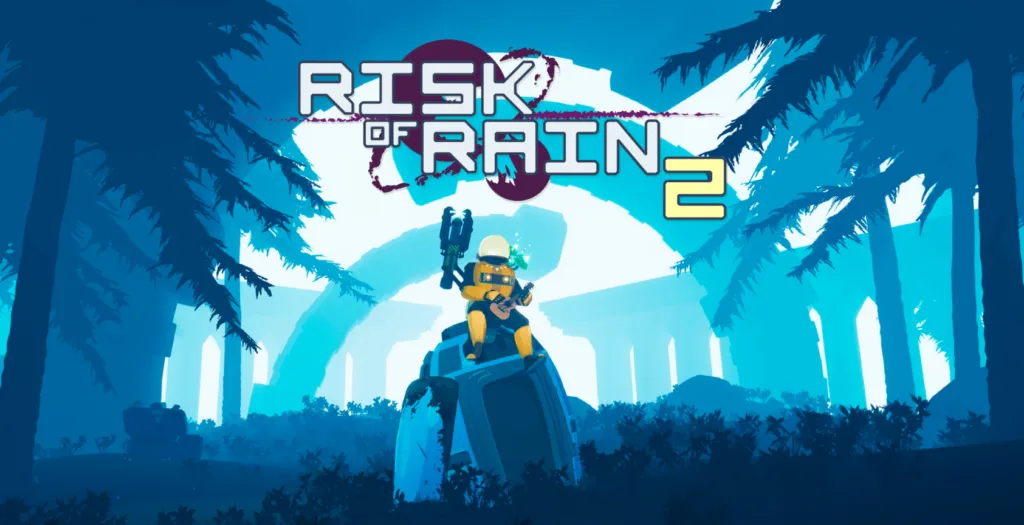
2. Risk of Rain 2
At a Glance
Players: 1–4
Co-op: Online
Platforms: PC, PlayStation 4, PlayStation 5, Xbox One, Xbox Series X|S, Nintendo Switch
Best for: Fast-paced action and highly replayable co-op runs
Why You’ll Love It
Risk of Rain 2 drops you onto hostile alien worlds where you fight through increasingly dangerous enemies, collect powerful items and try to survive long enough to escape.
It works particularly well as a co-op game because every run develops differently. Your team might start out cautiously picking off enemies and searching for equipment, then end up ridiculously powerful as upgrades begin stacking together. Or everything can fall apart spectacularly within minutes.
What Makes It Special
The escalating chaos is a huge part of the appeal. Difficulty increases as time passes, encouraging your group to balance exploration against the need to keep moving.
Different survivors also have distinct abilities and playstyles, giving everyone a chance to find a role they enjoy. Combined with randomized items, environments and enemy encounters, that makes Risk of Rain 2 incredibly replayable.
It’s a great contrast to the more puzzle-focused and narrative co-op games in this list. Sometimes cooperation isn’t about carefully discussing a solution. Sometimes it’s about yelling at your friends while several hundred aliens try to kill you.
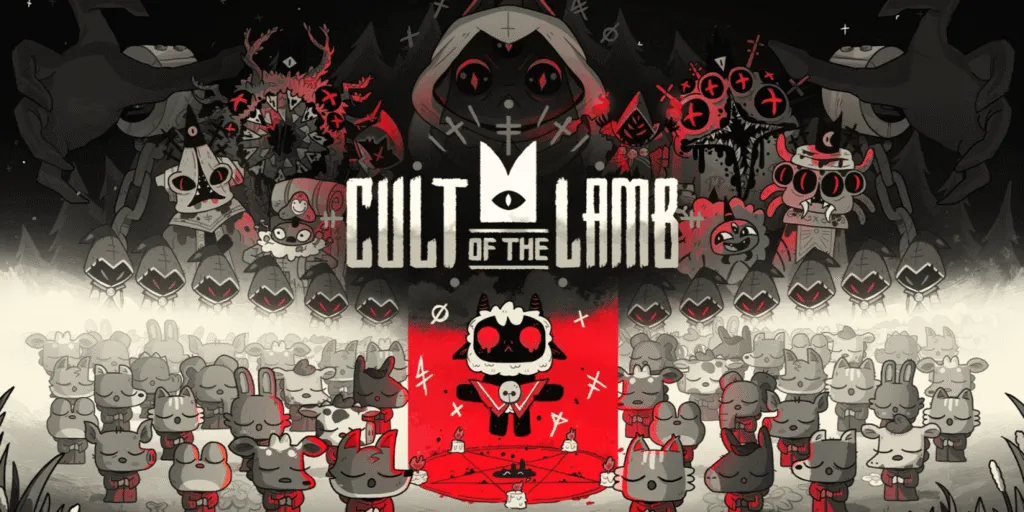
3. Cult of the Lamb
At a Glance
Players: 1–2
Co-op: Local co-op
Platforms: PC, Nintendo Switch, PlayStation 4/5, Xbox One, Xbox Series X|S
Best for: Action, management, and something wonderfully weird
Why You’ll Love It
Cult of the Lamb mixes fast-paced dungeon crawling with the surprisingly absorbing job of building and managing your own cult. In local co-op, one player takes control of the Lamb while the other plays as the Goat, letting two players tackle crusades, gather resources, and look after their growing community together.
It’s a great choice if you want co-op with more variety than simply progressing through levels. One minute you’re fighting monsters, the next you’re cooking meals, tending to followers, or deciding how your increasingly strange little settlement should develop.
What Makes It Special
Few co-op games combine genres quite like Cult of the Lamb. Its dungeon runs provide the action, while cult management adds a slower strategic layer where you’re building, upgrading, performing rituals, and keeping your followers happy.
That contrast is wrapped in an unmistakable darkly cute art style, balancing adorable woodland creatures with some delightfully sinister ideas.
Keep in Mind
Co-op is local only, so you can’t officially invite a friend to join you through standard online multiplayer.
It’s also considerably darker than its adorable art style initially suggests. Expect combat, sacrifice, cult themes, and plenty of morbid humor beneath all those cute animals.
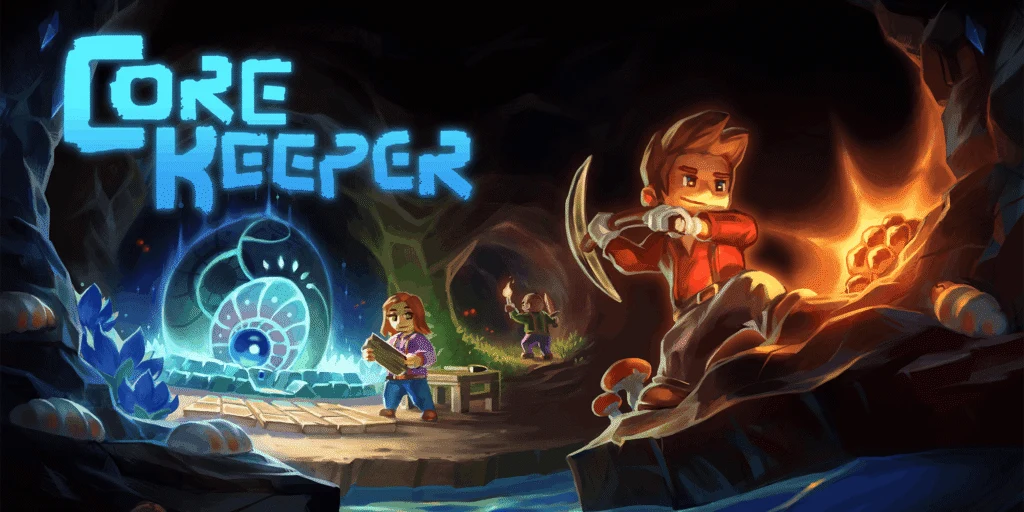
4. Core Keeper
At a Glance
Players: 1–8
Co-op: Online multiplayer
Platforms: PC, PlayStation 4/5, Xbox One, Xbox Series X|S, Nintendo Switch
Best for: Exploration, building, and long-term progression
Why You’ll Love It
Core Keeper drops you into a vast underground world filled with resources to gather, biomes to uncover, creatures to fight, and secrets hidden far beyond your starting point. It works especially well with a group because everyone can contribute in different ways, whether that’s mining new tunnels, gathering materials, building the base, farming, crafting equipment, or heading out in search of the next boss.
It’s the kind of co-op game that can easily become an ongoing shared project rather than something you finish in a few sessions.
What Makes It Special
The real appeal is the sense of progression. Your underground base gradually grows from a simple shelter into something much more elaborate, while better tools and equipment unlock new areas to explore.
Boss fights, changing environments, crafting systems, and large-scale exploration give the game plenty of variety, and the larger player count makes it a strong choice for groups who want more freedom than a tightly scripted co-op adventure.
Keep in Mind
Core Keeper is more open-ended than story-driven, so players who prefer a clear narrative or tightly structured levels may find it less focused.
It also rewards longer sessions and steady progression, making it a better fit for groups looking for a world they can keep returning to rather than a quick one-night co-op experience.

5. Sea of Stars
At a Glance
Players: 1–3
Co-op: Local co-op
Platforms: PC, Nintendo Switch, PlayStation 4/5, Xbox One, Xbox Series X|S
Best for: RPG fans and story-driven adventures
Why You’ll Love It
Sea of Stars is a great choice for players who love traditional RPGs but want to experience the journey together. Its Single Player+ co-op mode allows up to three people to travel through the world as a party, exploring colorful environments, solving puzzles, and taking part in its turn-based battles together.
It’s especially appealing if your idea of a good co-op evening involves settling into a story rather than racing through short levels or competing for a high score.
What Makes It Special
The gorgeous pixel art immediately stands out, but Sea of Stars also brings an unusual cooperative twist to a genre traditionally designed for solo play.
During combat, players can coordinate timed attacks and defensive moves through the game’s Co-op Timed Hits system, encouraging everyone to stay involved rather than leaving one person to make every decision. Outside battle, you explore its world and follow the story together.
Keep in Mind
Sea of Stars was originally designed as a single-player RPG, with Single Player+ added after launch. As a result, cooperation isn’t as deeply woven into every mechanic as it is in games created specifically for co-op.
It’s also a substantial story-driven RPG, so it’s better suited to a group willing to return regularly than players looking for a quick multiplayer session.
6. Abiotic Factor
At a Glance
Players: 1–6
Co-op: Online co-op
Platforms: PC, PlayStation 5, Xbox Series X|S
Best for: Survival, crafting, and longer adventures with friends
Why You’ll Love It
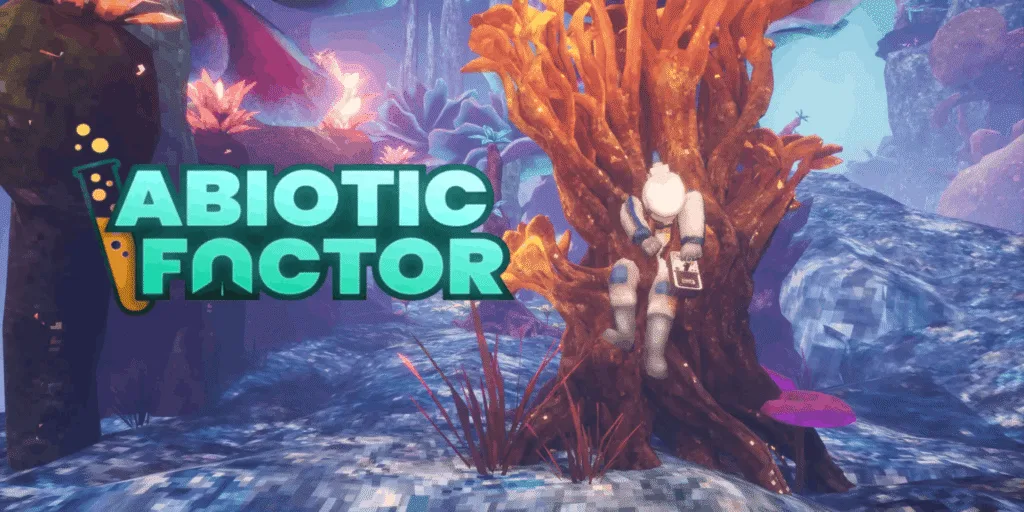
Abiotic Factor is a survival crafting game for groups who want something they can really sink their teeth into. Trapped inside a sprawling underground research facility after a containment breach, you and your fellow scientists need to explore, gather resources, craft equipment, and somehow survive everything now roaming the corridors.
With support for up to six players, there’s plenty of room for people to take on different jobs. One person might focus on cooking and supplies while someone else crafts equipment, explores new areas, or deals with whatever escaped from the laboratory this time.
What Makes It Special
Instead of another wilderness survival game, Abiotic Factor puts scientists at the center of a wonderfully strange 1990s-inspired sci-fi disaster.
Character skills and professions encourage players to specialize, making teamwork feel useful as your group establishes bases, manages resources, develops new equipment, and gradually pushes deeper into the facility. There’s a strong sense of discovery too, with new areas, threats, and increasingly bizarre experiments waiting beyond the next locked door.
Keep in Mind
Abiotic Factor is a bigger time commitment than many games on this list. Survival systems, crafting, character progression, and exploration all reward groups willing to return for longer sessions.
It’s also online co-op rather than a couch co-op experience, so everyone will need their own system and copy of the game.
7. Chained Together
At a Glance
Players: 1–4
Co-op: Local + online co-op
Platforms: PC
Best for: Chaotic teamwork and testing your friendships
Why You’ll Love It
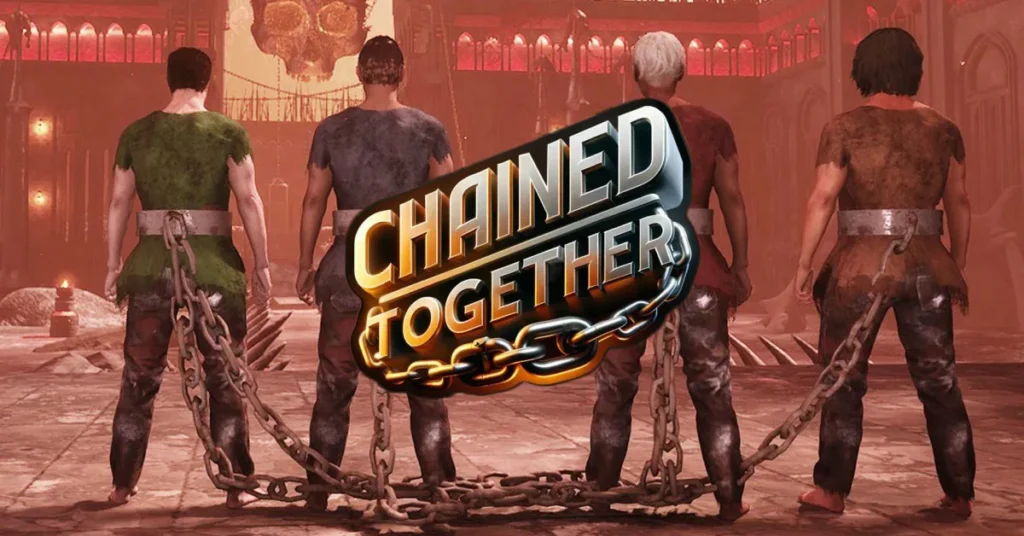
Chained Together takes a very simple idea and turns it into wonderfully frustrating co-op. You and your teammates are literally chained together as you attempt to climb higher and higher through a world filled with platforms, obstacles, and opportunities for everything to go spectacularly wrong.
Every jump becomes a group decision. Timing matters, communication is essential, and one person’s mistake can send everyone tumbling back down. If your group enjoys games where failure is often funnier than success, this is an excellent choice.
What Makes It Special
The chain isn’t just a visual gimmick. It physically connects the players and completely changes how you approach movement. You’ll need to coordinate jumps, manage the distance between each other, and sometimes use the chain itself to overcome obstacles.
That creates plenty of moments where everyone shares the consequences of one terrible decision, which is exactly where much of the fun comes from.
Keep in Mind
Chained Together can be deliberately frustrating. Falling can undo a lot of progress, so it’s probably not the game to choose if your group wants a calm, low-pressure evening.
It’s also currently a PC-only recommendation, making it less accessible to console groups than many of the other games on this list.
8. PEAK
At a Glance
Players: 1–4
Co-op: Online co-op
Platforms: PC
Best for: Chaotic climbing adventures with friends
Why You’ll Love It
PEAK turns climbing a mountain into a wonderfully unpredictable co-op adventure. You and up to three friends must work your way toward the summit, navigating increasingly dangerous terrain while managing stamina, injuries, supplies, and whatever else the mountain decides to throw at you.
What makes it particularly fun with friends is how quickly a simple climb becomes a group problem. You might need to help someone reach a difficult ledge, share limited resources, or rescue a teammate whose ambitious shortcut has gone very badly wrong.
What Makes It Special
PEAK combines cooperative climbing with light survival mechanics, making teamwork about more than simply reaching the same destination. Players can help each other overcome obstacles and recover from mistakes, while the unpredictable nature of each quest keeps repeat attempts interesting.
It’s a simple concept that creates plenty of spontaneous moments, from dramatic rescues to spectacular group disasters.
Keep in Mind
PEAK is built around online multiplayer rather than traditional couch co-op, and is currently available on PC.
There’s also plenty of failure involved. Reaching the summit requires patience, coordination, and accepting that occasionally your entire expedition may unravel because somebody made one questionable jump.
9. PICO PARK 2
At a Glance
Players: 2–8
Co-op: Local + online co-op
Platforms: PC, Nintendo Switch, Xbox One, Xbox Series X|S
Best for: Group puzzle-solving and communication
Why You’ll Love It
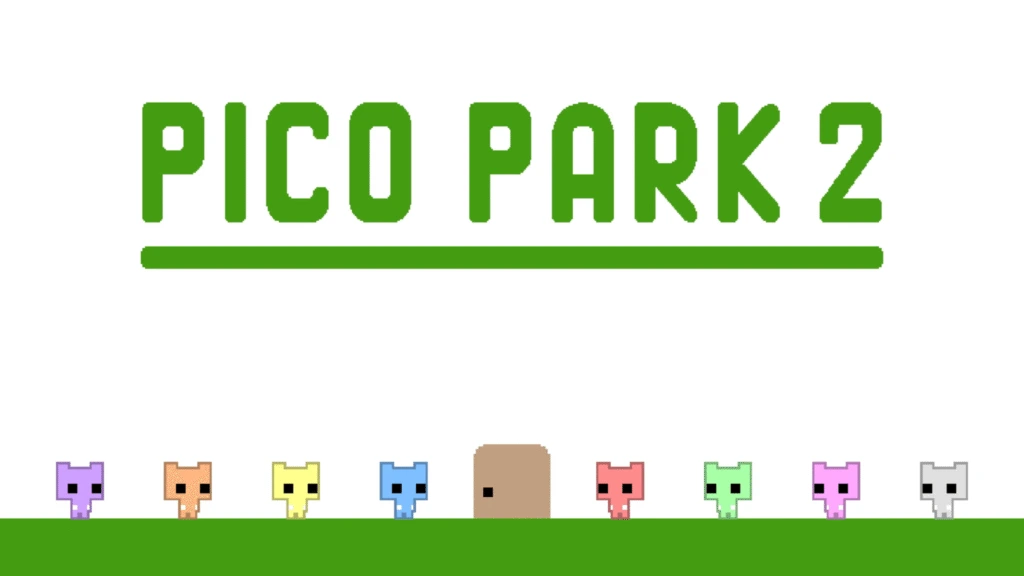
PICO PARK 2 proves that a co-op game doesn’t need complicated mechanics to create a great multiplayer experience. The goal of each level is usually easy to understand, but actually completing it requires everyone to communicate, coordinate, and get their timing right.
With support for up to eight players, it’s particularly good for larger groups. Sessions are easy to jump into, making it a great choice when you want something social without committing to a long story or progression system.
What Makes It Special
The deliberately simple presentation keeps the focus firmly on cooperation. Players might need to stand on each other, activate switches, move objects, or coordinate movements so the entire group can reach the exit.
The puzzles become increasingly inventive as you progress, and adding more players often creates more possibilities for chaos as well as cooperation. It’s easy to understand, but getting eight people to execute the same plan is another matter entirely.
Keep in Mind
PICO PARK 2 is at its best when everyone is willing to communicate and work as a team. One player going rogue can derail the entire group, although that can also produce some of its funniest moments.
Its intentionally minimalist visual style may not appeal to players looking for a story-rich or visually elaborate adventure.
10. Keep Talking and Nobody Explodes
At a Glance
Players: 2+
Co-op: Local / remote
Platforms: PC, Nintendo Switch, PlayStation 4/5, Xbox, mobile, VR
Best for: Communication and unconventional co-op
Why You’ll Love It
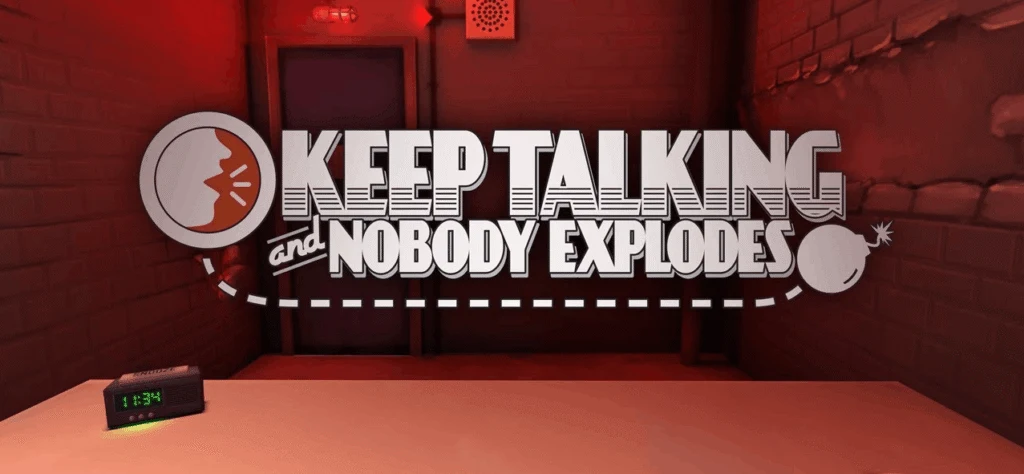
Keep Talking and Nobody Explodes turns communication itself into the game. One player is trapped with a ticking bomb covered in unfamiliar modules, while everyone else has access to the Bomb Defusal Manual but can’t see the bomb.
The person with the bomb has to describe exactly what they see, while the other players work out the solution and talk them through it before time runs out. It’s tense, funny, and particularly good for mixed groups because only one person actually needs to control the game.
What Makes It Special
There are no shared characters to control or worlds to explore together. Instead, success depends almost entirely on how well you can describe, listen, interpret, and communicate under pressure.
As the bombs become more complicated, players naturally develop their own shorthand and ways of working together. That makes it one of the most unusual examples of cooperative game design on this list.
Keep in Mind
Communication is everything, so this isn’t ideal if you’re looking for a traditional adventure you can casually play side by side.
It’s also designed to create pressure. Timers, mistakes, and increasingly complicated modules can get surprisingly stressful, especially when someone insists they definitely said three blue wires, not two.
Find Your Perfect Indie Co-op Game
Not every co-op game works for every group. Sometimes you want a story-driven adventure for two; other times you want something relaxing, a puzzle that makes you think together, or complete chaos with a group of friends.
To make choosing easier, we’ve grouped some of our favorite indie co-op games by the kind of experience they offer. Alongside a few standouts from our main list, you’ll also find some new recommendations and lesser-known games worth discovering.
Whether you’re playing with a partner, gathering a group, or simply looking for a more wholesome way to spend an evening together, here’s where to start.
❤️ Best for Couples
Some co-op games simply let two people play at the same time. The best games for couples make the relationship between those two players part of the experience, giving you reasons to communicate, help each other, and create shared memories along the way.
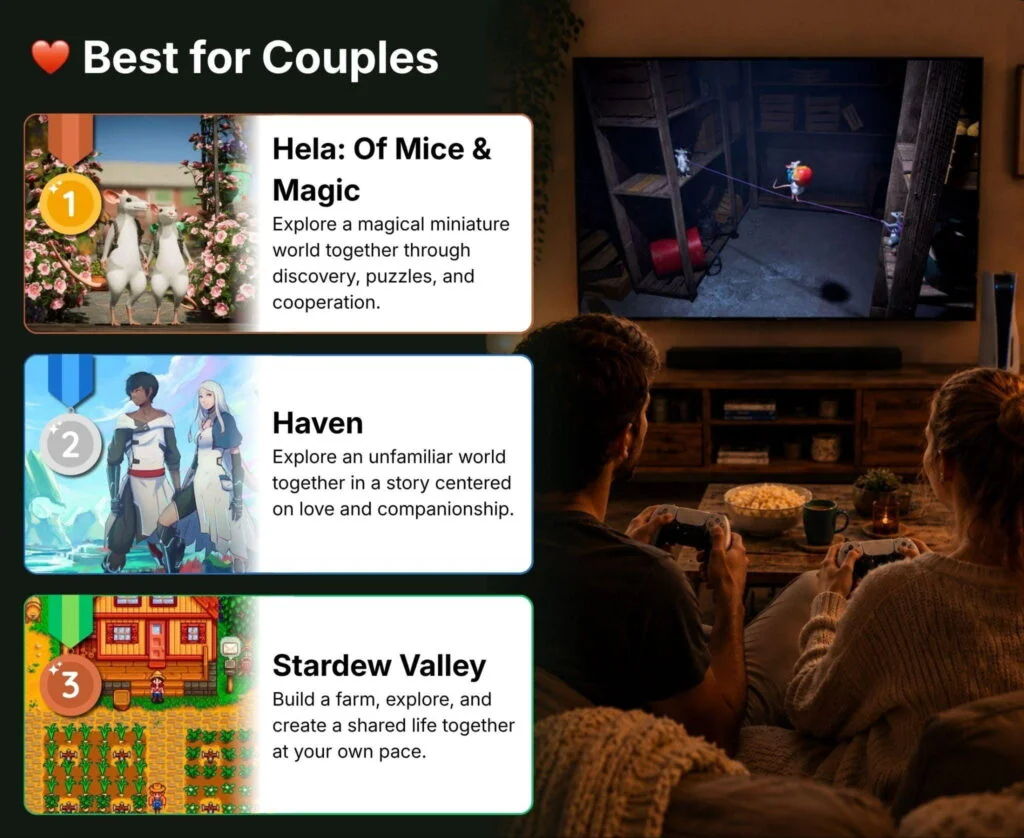
🥇 Hela: Of Mice & Magic
Hela: Of Mice & Magic turns a tiny Scandinavian-inspired world into an adventure designed to be discovered together. Its two-player local split-screen encourages exploration, cooperation, and creative problem-solving, making it particularly appealing for couples who want a gentler shared experience where working together is at the heart of the journey.
🥈 Haven
Haven follows couple Yu and Kay as they escape to an unfamiliar planet and build a life together. Its exploration, combat, and story are designed around their relationship, making romance and companionship central to the experience rather than simply providing a backdrop for co-op.
🥉 Stardew Valley
Stardew Valley gives couples something a little different: a world they can gradually build together. You can grow a farm, explore the mines, meet the townspeople, decorate your home, and work toward shared goals at your own pace. It’s an excellent choice for couples looking for a cozy co-op game they can return to again and again.
🧘 Best Relaxing Co-op Games
Not every co-op game needs a countdown, difficult boss fight, or someone shouting instructions across the room. Sometimes the best shared experiences are the ones that let you slow down, explore at your own pace, and simply enjoy being in the world together.
These games put atmosphere, discovery, and companionship ahead of fast reactions, making them ideal for a quieter evening together.
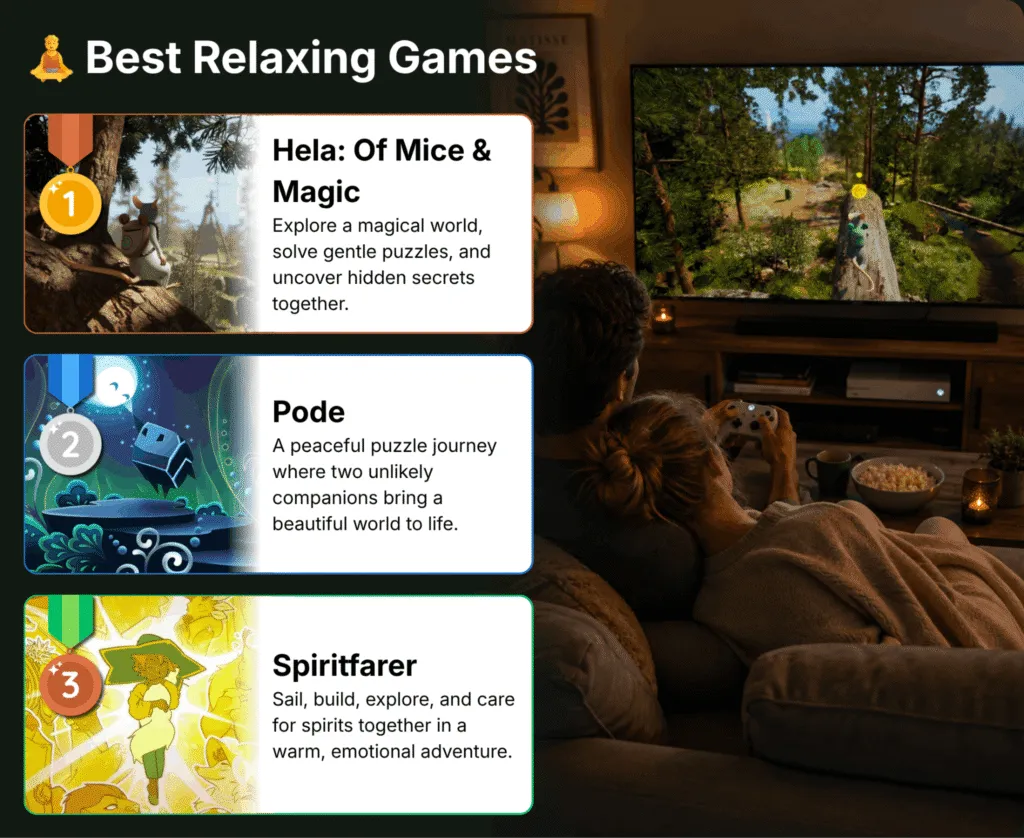
🥇 Hela: Of Mice & Magic
Hela: Of Mice & Magic encourages players to explore its Scandinavian-inspired world with curiosity rather than urgency. Its focus on discovery, environmental puzzles, and cooperation makes it a natural fit for players looking for a gentler shared adventure.
🥈 Pode
Pode is a peaceful cooperative puzzle adventure about a rock and a fallen star traveling through a beautiful underground world. Players use their different abilities together to solve environmental puzzles, with no combat or pressure to rush through the experience.
🥉 Spiritfarer
Spiritfarer combines exploration, crafting, farming, and relationship-building in a thoughtful adventure about helping spirits complete their final journeys. A second player can join as Daffodil the cat, making it a lovely choice for sharing a slower, more emotional experience.
🧩 Best Puzzle Co-op Games
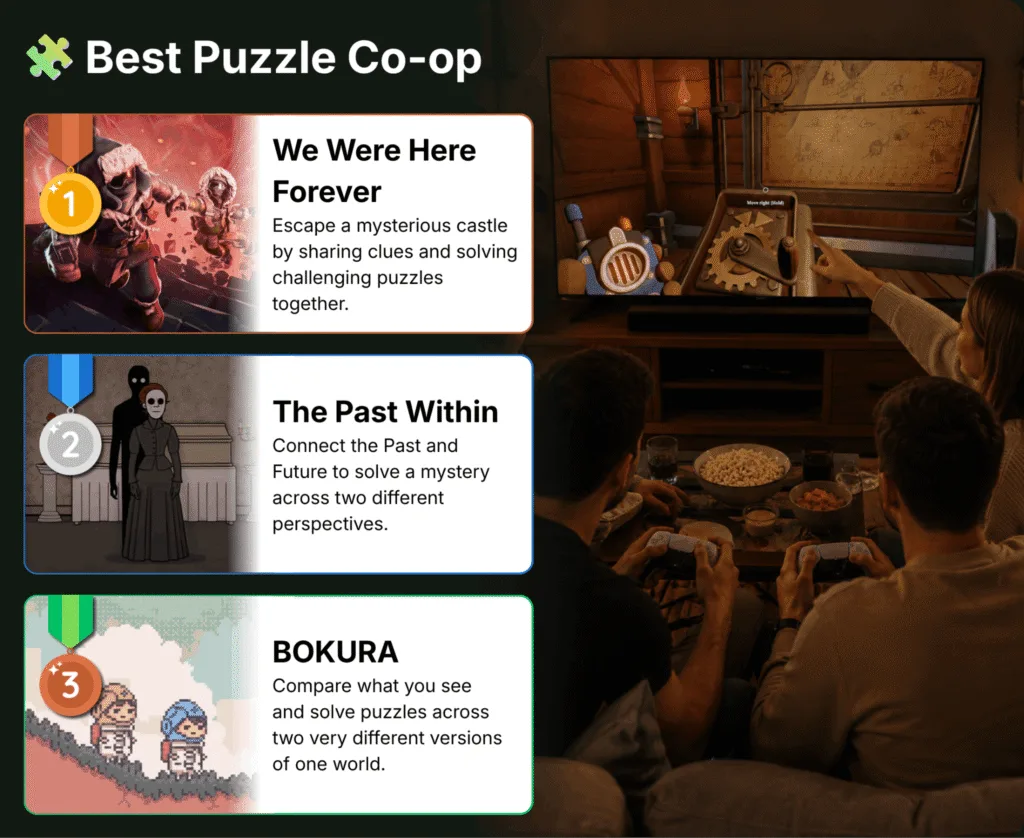
The best co-op puzzle games make working together part of the puzzle itself. You might have different information, see entirely different versions of the world, or need your partner to understand something they can’t see. These three games are built around that idea, but each approaches it in a completely different way.
🥇 We Were Here Forever
Separated from your partner inside the mysterious Castle Rock, neither player has everything they need to escape. You’ll explore different areas, uncover clues, and communicate what you can see to solve interconnected puzzles. It’s an excellent choice for pairs who want challenging puzzles where genuine teamwork is essential.
🥈 The Past Within
Two players experience the same mystery from completely different points in time, with one exploring the Past and the other the Future. Clues discovered in one timeline help solve puzzles in the other, creating a clever back-and-forth experience where describing exactly what you see becomes part of solving the mystery.
🥉 BOKURA
Two players travel through the same world but perceive it very differently. What looks like one thing on your screen may appear completely different to your partner, forcing you to compare perspectives and work out what’s really happening. It’s a wonderfully unusual approach to cooperative puzzle design.
🧭 Best for Exploration
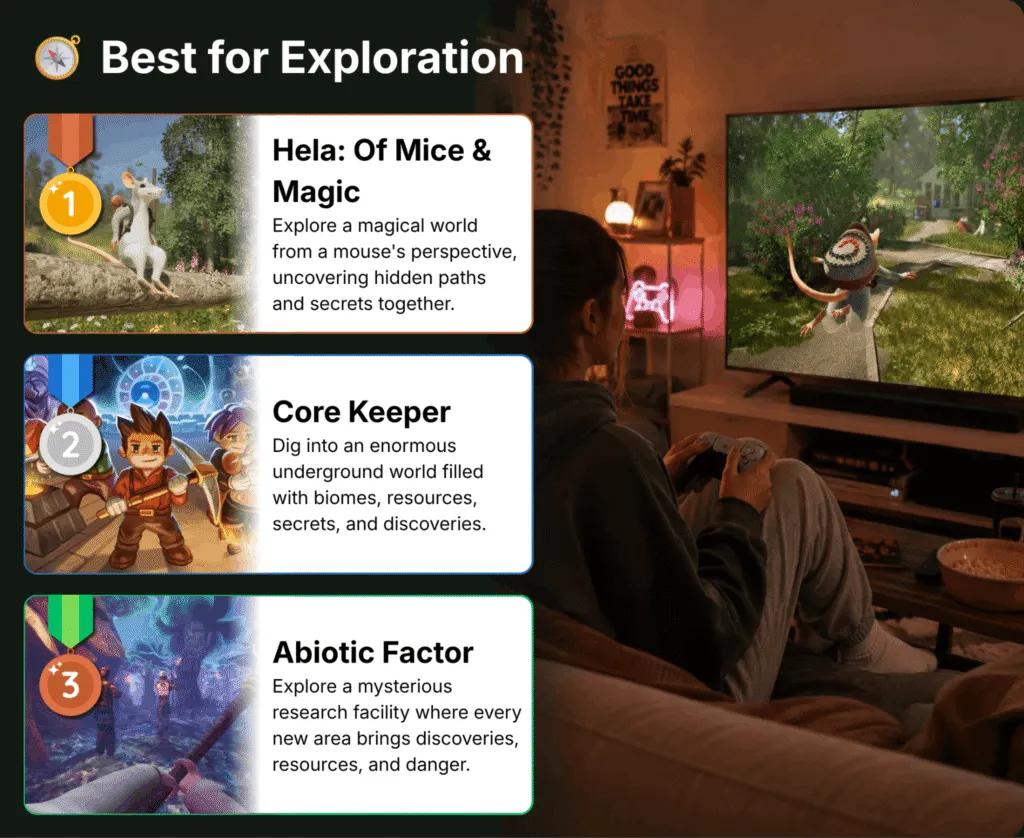
Some co-op games are at their best when nobody is telling you exactly where to go next. These games reward curiosity, wandering off the obvious path, and discovering a world together, whether you’re exploring a magical landscape, digging deeper underground, or venturing into the unknown corridors of a research facility.
🥇 Hela: Of Mice & Magic
Exploration is at the heart of Hela: Of Mice & Magic. From a tiny mouse perspective, everyday environments become enormous landscapes filled with hidden paths, secrets, and things to investigate. Exploring together encourages players to slow down, look around, and see what they can uncover beyond the obvious route.
🥈 Core Keeper
Core Keeper drops players into a huge underground world and lets curiosity lead the way. Mine through walls, discover new biomes, uncover resources and ancient secrets, and gradually expand your base as your group pushes further into the darkness.
🥉 Abiotic Factor
A sprawling underground research facility becomes your playground in Abiotic Factor. Exploring deeper reveals new areas, resources, threats, and increasingly strange experiments, giving groups plenty of reasons to prepare together before venturing somewhere unknown.
👨👩👧👦 Best for Small Groups
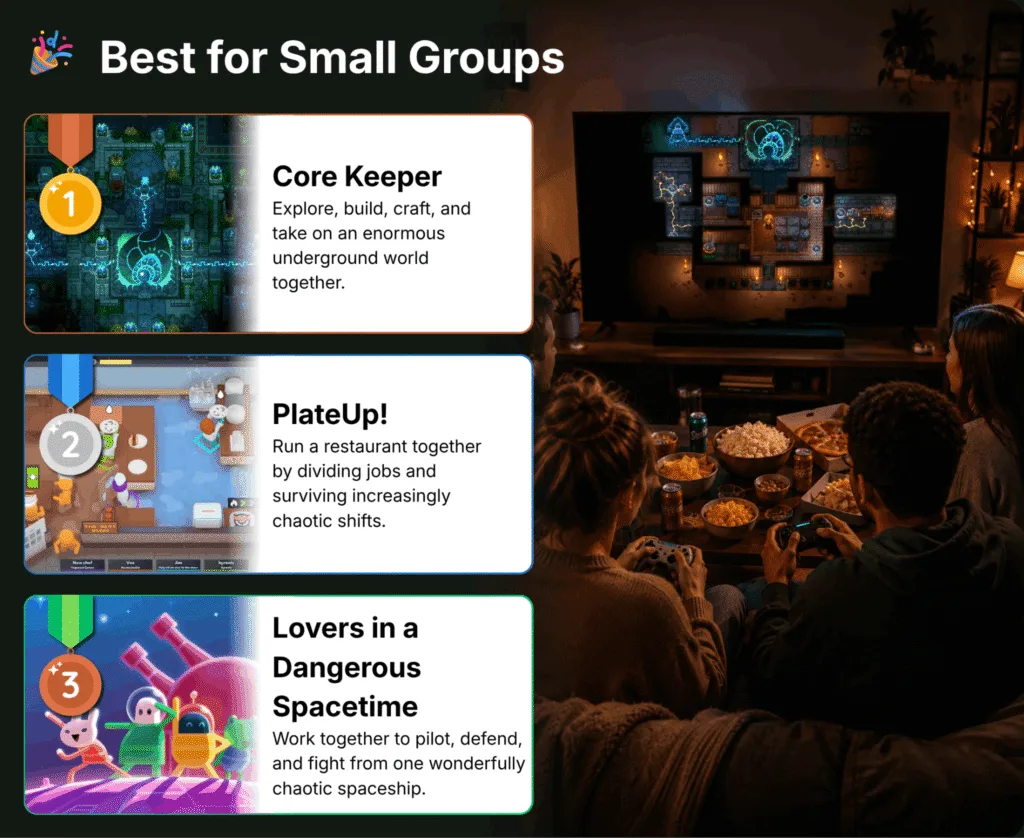
Some co-op games become better when you add more people. Rather than simply putting another character on screen, these games give everyone something useful to contribute, whether that’s exploring, managing a kitchen, or keeping a spaceship from falling apart.
🥇 Core Keeper
Core Keeper is particularly well suited to groups because there’s always something different to do. Players can explore underground, gather resources, build the base, farm, craft equipment, or head out together to tackle bosses. Having more people makes the world feel more active while letting everyone contribute in their own way.
🥈 PlateUp!
Running a restaurant becomes a genuine team effort in PlateUp!. Up to four players can divide responsibilities between preparing food, serving customers, clearing tables, and washing dishes, while gradually designing and upgrading the restaurant. The more people involved, the more elaborate your operation can become, assuming everyone actually sticks to their job.
🥉 Lovers in a Dangerous Spacetime
Up to four players share control of a colorful spaceship, rushing between stations responsible for weapons, shields, engines, and other systems. Nobody can manage everything alone, so the group needs to constantly communicate and decide where each person is needed most.
🎉 Best for Chaos
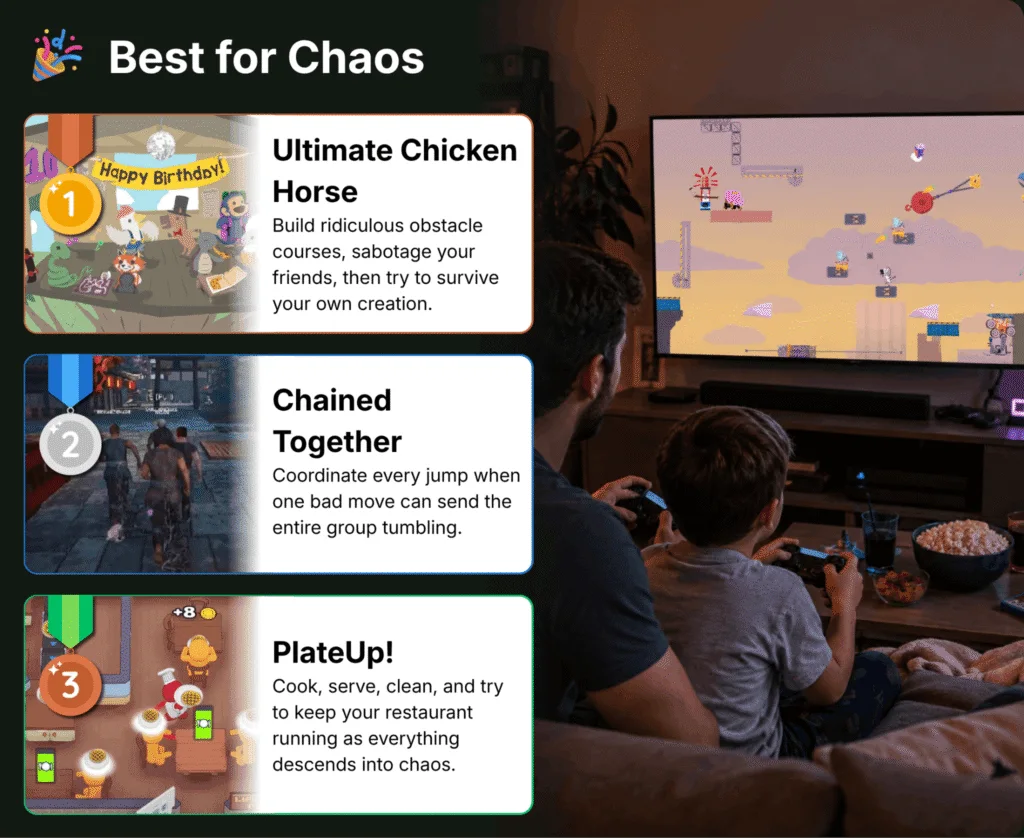
Some multiplayer games are about calm teamwork and careful coordination. These games are about plans falling apart, everyone talking at once, and discovering which of your friends handles pressure the worst. The chaos is not an unfortunate side effect. It is exactly why they are so much fun.
🥇 Ultimate Chicken Horse
Ultimate Chicken Horse turns friendly competition into increasingly ridiculous sabotage. Players take turns adding platforms, traps, and obstacles to a shared level before everyone attempts to reach the finish. You need to make the course difficult enough to stop your friends, but not so impossible that you can’t complete it yourself. By the end, even the simplest level can become an absurd death trap of your own making.
🥈 Chained Together
In Chained Together, your mistakes don’t just affect you. Being physically chained to the other players means every jump and movement needs some degree of coordination. One person mistiming a leap can send the entire group tumbling back down, turning progress into a wonderfully frustrating test of communication, timing, and friendship.
🥉 PlateUp!
PlateUp! starts innocently enough: cook some food, serve your customers, wash the dishes. Then the restaurant gets busier. Orders pile up, dirty plates appear everywhere, someone blocks the kitchen doorway, and suddenly four people are shouting instructions about a steak. Dividing responsibilities helps, but keeping everything under control is another matter entirely.
🌿 Best Wholesome Co-op Games
Not every co-op adventure needs high stakes or frantic competition. Some games are memorable because they create a world you simply enjoy spending time in together. These picks put companionship, imagination, and shared discovery at the heart of the experience.
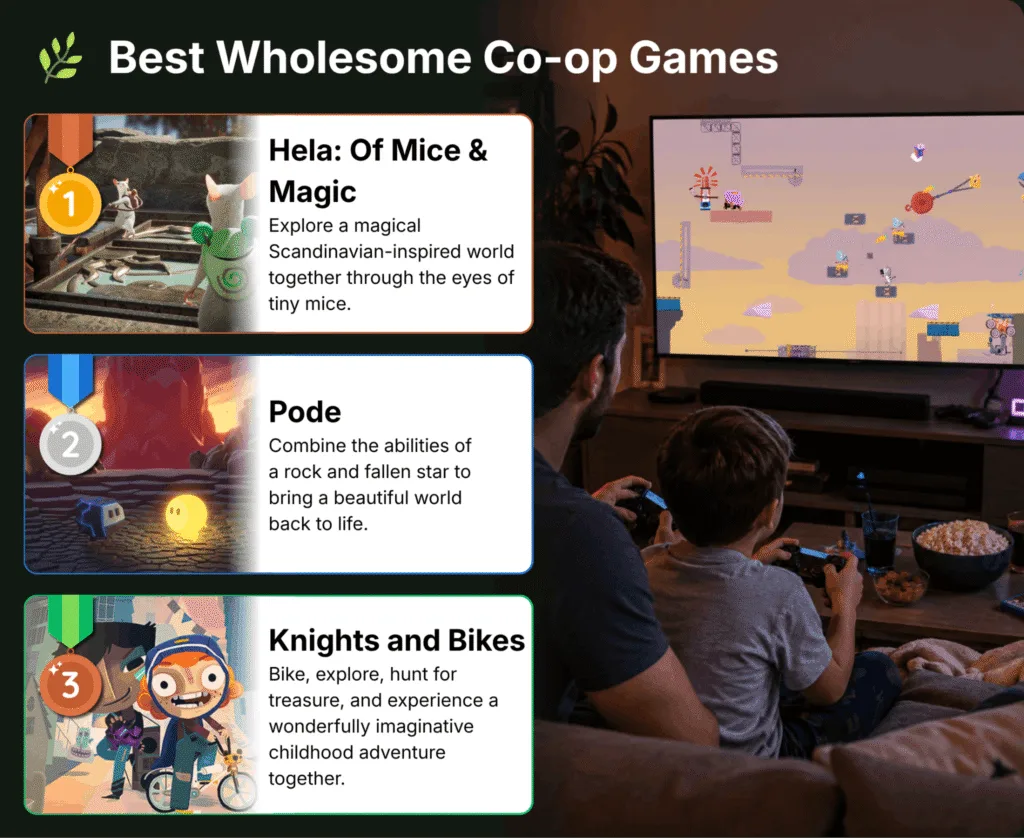
🥇 Hela: Of Mice & Magic
Hela: Of Mice & Magic brings players together for a warm adventure inspired by Scandinavian landscapes and folklore. Playing as tiny mice transforms the everyday world into somewhere enormous and full of possibilities, with exploration, puzzles, and magical discoveries encouraging players to experience the journey together. Its playful characters and gentle sense of wonder make it a natural fit for players looking for something wholesome to share.
🥈 Pode
Pode follows a little rock and a fallen star as they journey through a beautiful underground world together. Each character has different abilities, so players need to combine their strengths to solve puzzles and bring color and life back to their surroundings. It’s gentle, charming, and built around helping one another.
🥉 Knights and Bikes
Knights and Bikes captures the imagination of childhood through the adventures of two friends exploring a fictional British island. Players bike around, hunt for treasure, battle imaginary threats, and uncover mysteries together. Its hand-painted style, humor, and focus on friendship give the adventure a wonderfully distinctive personality.
Local Co-op vs Online Co-op
Before choosing a co-op game, it’s worth checking how its multiplayer actually works. Some games are designed for people sharing a screen, others require everyone to have their own device, and some give you the flexibility to choose between the two.
🛋️ Local Co-op
Players are together in the same place, usually sharing the same console or PC. Depending on the game, you might share one screen or play in split-screen.
Great for: Couples, families, roommates, and game nights.
Examples: Hela: Of Mice & Magic, Split Fiction, Cult of the Lamb
🌐 Online Co-op
Players connect over the internet from separate devices, allowing friends to play together even when they’re nowhere near the same sofa.
Great for: Friends who live apart, regular gaming groups, and longer multiplayer adventures.
Examples: Core Keeper, Abiotic Factor, PEAK
🔀 Both
Some games support both local and online co-op, giving you more freedom over how and where you play. You might play together on the couch one weekend and continue the adventure online another time.
Example: Hela: Of Mice & Magic
⚠️ Always Check the Co-op Mode Before Buying
A game being labeled “multiplayer” doesn’t automatically mean two people can play together on the same screen. Some games only support online multiplayer, while others may offer local play but require additional controllers or devices.
Before buying, check the number of supported players, whether co-op is local or online, and what each player needs to join. It can save you from organizing game night only to discover everyone needs their own copy and console.
How to Choose the Right Co-op Indie Game
The best co-op game isn’t necessarily the one with the highest review score. It is the one that fits the people you’re playing with, the time you have, and the kind of experience you want to share. Before buying, think about a few practical things.
👥 Number of Players
Start with how many people will actually be playing. A game designed specifically for two can create a brilliant partnership, while three or four players may be better suited to games where responsibilities can be divided across the group.
🛋️ Local or Online
Decide whether you’ll be sharing a couch or connecting from different homes. Check the exact multiplayer options rather than assuming every co-op game supports both.
🎮 Experience Level
Think about the least experienced player in the group. Some games demand precise movement, quick reactions, or familiarity with complex controls. Others make it much easier for beginners to contribute without feeling like they’re holding everyone back.
🧘 Relaxing or Chaotic
What kind of evening are you planning? You might want to quietly explore somewhere beautiful together, or you might actively want the kind of game that ends with four people shouting contradictory instructions across the room.
🧩 What Do You Want to Do?
“Co-op” covers an enormous range of experiences. Do you want to explore, solve puzzles, build a world, survive, follow a story, manage something together, or compete against increasingly questionable physics?
Choosing the activity first can be much more useful than choosing by genre alone.
⏱️ Time Available
Some games work brilliantly in quick 20-minute sessions. Others are worlds you’ll return to for weeks or even months. Consider how often your group can realistically play together, especially before committing to a longer adventure.
💻 Platform
Finally, check that everyone can actually play. Look at platform availability, cross-platform support, controller requirements, and whether each player needs their own copy before convincing the entire group to buy something.
A little checking beforehand can prevent the least exciting co-op challenge of all: troubleshooting game night.
Why Indie Games Are Brilliant for Co-op
Indie games have become home to some of the most creative co-op experiences around. Without needing every game to follow the same formula, smaller teams can experiment with how players interact, cooperate, and experience a world together.
💡 Creative Mechanics
Indie developers often find unusual ways to make players rely on each other, from seeing different versions of the same world to being physically chained together.
🎨 Distinctive Worlds
Co-op can take you almost anywhere, from magical Scandinavian-inspired landscapes and underground kingdoms to mysterious research facilities and strange new planets.
❤️ More Than Combat
Working together doesn’t have to mean fighting side by side. You might explore, solve puzzles, build, cook, climb, communicate, manage resources, or simply experience a story together.
🤝 Cooperation That Matters
Great co-op design gives each player a reason to be there. Your partner isn’t just controlling another character. What they do changes what you can achieve together.
💎 Unexpected Experiences
Some of the most memorable multiplayer ideas come from games willing to try something different. That’s part of the joy of exploring indie co-op: you don’t always know what kind of shared experience you’ll discover next.
Hidden Gem Co-op Indie Games
Beyond the bigger co-op hits, there are plenty of smaller games experimenting with unusual mechanics and completely different ways to play together. If you’re looking for something you might have missed, these four indie gems deserve a closer look.

KeyWe
KeyWe puts two players in charge of Jeff and Debra, a pair of tiny kiwi birds working inside a wonderfully chaotic postal office. You’ll type telegrams, sort packages, operate machinery, and attempt to keep the mail moving despite the minor problem of having wings instead of hands. It’s charming, unusual, and built around communication rather than combat.
Players: 1–2 | Co-op: Local & Online | Platforms: PC, Nintendo Switch, PlayStation, Xbox

Bread & Fred
Two penguins. One rope. One mountain. Bread & Fred turns cooperative climbing into an exercise in communication, timing, and trying very hard not to blame the person sitting next to you. Because you’re physically connected, one badly timed jump can send both players tumbling down the mountain. Simple concept, excellent co-op design, potentially catastrophic consequences for your friendship.
Players: 1–2 | Co-op: Local & Online | Platforms: PC, Nintendo Switch, PlayStation, Xbox

Blanc
Blanc follows a wolf cub and a fawn who become separated from their families during a snowstorm and must find their way home together. Each animal brings different abilities to the journey, so progressing means helping one another navigate obstacles. Its striking hand-drawn black-and-white world and simple controls make it an especially approachable shared adventure.
Players: 1–2 | Co-op: Local & Online | Platforms: PC, Nintendo Switch
River Tails: Stronger Together
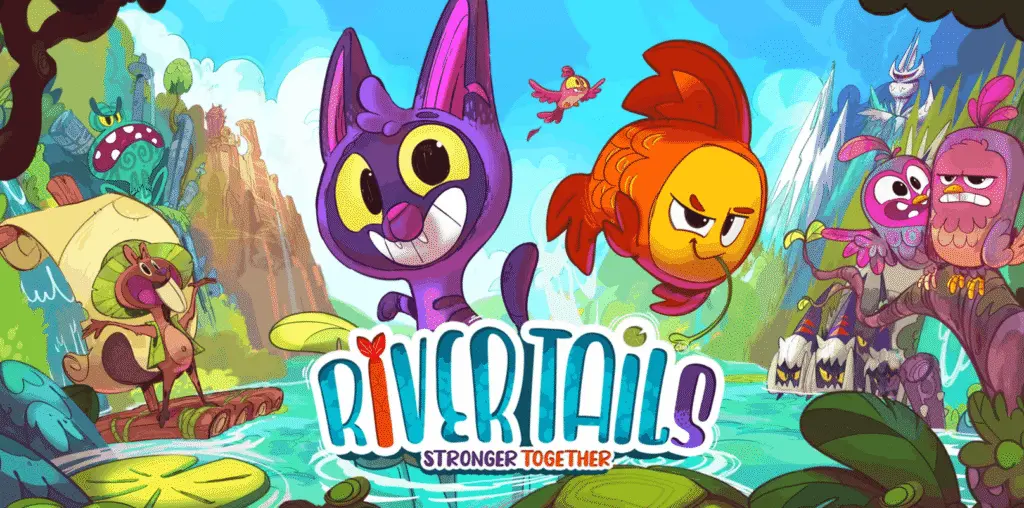
River Tails: Stronger Together pairs an energetic purple kitten with a decidedly grumpy fish on a colorful cooperative adventure. Their very different abilities mean neither player can progress far alone, turning platforming challenges and environmental puzzles into exercises in timing and teamwork. It’s playful, visually distinctive, and exactly the kind of lesser-known co-op game worth discovering.
Players: 1–2 | Co-op: Local | Platforms: PC, Nintendo Switch, PlayStation, Xbox

Hela: Of Mice & Magic: A New Co-op Adventure for 2026
One of the things indie games do particularly well is take something familiar and invite us to see it from an entirely different perspective. Hela: Of Mice & Magic does that quite literally.
When you’re only the size of a tiny mouse, an ordinary Scandinavian landscape becomes an enormous place to explore. Gardens become sprawling playgrounds, everyday objects create new possibilities, and small details become discoveries worth stopping for.
That perspective also shapes Hela’s approach to cooperation. Rather than making co-op simply about having more players on screen, the adventure encourages people to explore, experiment, solve problems, and discover things together. It’s less about keeping up with the person beside you and more about sharing the journey with them.
That philosophy feels particularly at home among the indie games in this guide. The most interesting co-op experiences often aren’t about making something bigger or louder. They’re about finding a different way for people to experience a world together.
Hela: Of Mice & Magic is currently planned for release on December 1, 2026.
Ready to Become a Tiny Hero?
Wishlist Hela: Of Mice & Magic and stay updated.
Where to Find More Co-op Indie Games
Once you’ve played through the obvious recommendations, there are plenty of places to discover smaller co-op games that might otherwise pass you by. Different storefronts are useful for different kinds of discovery, so it’s worth looking beyond just one platform.

Steam
Steam is one of the easiest places to browse PC indie games, with useful tags for co-op, local co-op, online co-op, multiplayer, and Remote Play Together. User reviews and community recommendations can also help surface smaller titles.

Nintendo eShop
The Nintendo eShop has a strong selection of indie games, particularly those suited to portable play and local multiplayer. It’s a good place to look for smaller puzzle, party, and couch co-op experiences.

PlayStation Store
PlayStation regularly features indie releases across PS4 and PS5, including everything from short experimental adventures to larger multiplayer games.

Xbox Store
The Xbox Store is another useful place to browse co-op indies, particularly alongside Game Pass, where smaller games can be easier to try without committing to a full purchase.

Epic Games Store
The Epic Games Store offers another growing selection of PC indie titles, including multiplayer and co-op releases alongside larger games.

itch.io
If you’re looking for something genuinely unusual, itch.io is one of the best places to explore. It’s home to experimental projects, small-team releases, game-jam creations, and indie games that may never appear prominently on the major storefronts.

Steam Remote Play Together
Some games designed primarily for local multiplayer can also be played remotely through Steam Remote Play Together. One player hosts the game on their PC and invites friends to join over the internet, allowing supported couch co-op titles to be played even when everyone isn’t in the same room.
It’s worth checking the game’s Steam page first, as Remote Play Together support varies by title.
Frequently Asked Questions
Some of the best co-op indie games include Hela: Of Mice & Magic, Split Fiction, Cult of the Lamb, Core Keeper, Sea of Stars, Abiotic Factor, Chained Together, PEAK, and PICO PARK 2. The best choice depends on whether you want exploration, puzzles, survival, storytelling, or something more chaotic.
Split Fiction is an excellent dedicated two-player adventure, while Hela: Of Mice & Magic offers local split-screen exploration and puzzle-solving. The Past Within, BOKURA, Haven, and Blanc are also strong choices for two people.
For couples, we’d recommend Split Fiction, Hela: Of Mice & Magic, and Haven. All three put the shared experience at the center, whether you’re tackling challenges together, exploring a world, or following a story built around two characters.
Hela: Of Mice & Magic, Pode, and Spiritfarer are great choices for a slower co-op experience. They focus more on exploration, puzzles, atmosphere, and spending time together than fast reactions or constant pressure.
For players sharing the same room, try Cult of the Lamb, Split Fiction, Sea of Stars, Ultimate Chicken Horse, PlateUp!, or Lovers in a Dangerous Spacetime. The upcoming Hela: Of Mice & Magic will also support two-player local split-screen.
Core Keeper, Abiotic Factor, PEAK, Split Fiction, and Chained Together are all strong options for playing with friends online. They range from long-term survival and exploration to shorter, more chaotic cooperative challenges.
If you’re playing with a larger group, look at games such as Core Keeper, Abiotic Factor, PEAK, PICO PARK 2, PlateUp!, Ultimate Chicken Horse, and Lovers in a Dangerous Spacetime. Player limits and co-op modes vary, so check the version and platform before buying.
KeyWe, Bread & Fred, Blanc, and River Tails: Stronger Together are worth discovering if you’re looking beyond the biggest indie releases. Each offers a different kind of cooperation, from running a postal office as kiwi birds to navigating platforming challenges as two very different animal companions.
Local co-op means players are together in the same place, typically sharing one console or PC. Online co-op allows players to connect over the internet from separate devices. Some games support both, while others offer only one option.
Sometimes. Steam Remote Play Together allows supported local multiplayer games to be played remotely. One person runs the game on their PC and invites other players to join over the internet. Not every local co-op game supports it, so check the game’s Steam page first.
Absolutely. Many indie co-op games use simple controls, approachable mechanics, or teamwork that allows a more experienced player to help a beginner. Games such as Pode, Blanc, and the upcoming Hela: Of Mice & Magic are good options for players looking for a gentler introduction to cooperative gaming.
Yes. Hela: Of Mice & Magic is designed as both a solo and cooperative adventure, with players exploring its Scandinavian-inspired world, solving environmental puzzles, and discovering secrets together.
Hela: Of Mice & Magic supports up to two players locally in split-screen and up to four players online. Solo play is also supported.
Hela: Of Mice & Magic is currently planned for release in Q4 2026 on PC, PlayStation 5, Xbox Series X|S, and Nintendo Switch 2.
Your Next Shared Adventure
The best co-op experiences aren’t necessarily the biggest, longest, or most spectacular games. Often, it’s the smaller moments that stay with you.
It’s finally understanding what your partner has been trying to explain for the last five minutes. Reaching the top of a mountain after countless failed attempts. Building a little corner of a world that gradually starts to feel like yours. Or simply exploring somewhere new and discovering things together for the first time.
That’s what makes co-op gaming special. The person you’re playing with becomes part of the experience and, eventually, part of the memories you have of it.
Indie games are particularly good at creating those moments because they’re willing to experiment with what playing together can mean. And with new adventures still arriving, there are plenty more shared memories waiting to be made.
Hela: Of Mice & Magic will bring its own tiny perspective to that tradition when it arrives on December 1, 2026.
Ready for Your Next Shared Adventure?
Wishlist Hela: Of Mice & Magic and stay updated.
{ “@context”: “https://schema.org”, “@graph”: [ { “@type”: [“WebPage”, “Article”], “@id”: “https://hela.jindermanpublishing.com/blog/best-co-op-indie-games/#webpage”, “url”: “https://hela.jindermanpublishing.com/blog/best-co-op-indie-games/”, “name”: “Best Co-op Indie Games to Play Together in 2026”, “headline”: “Best Co-op Indie Games to Play With Friends in 2026”, “description”: “Discover the best co-op indie games to play together in 2026, from relaxing adventures and clever puzzles to chaotic multiplayer hidden gems.”, “inLanguage”: “en-US”, “datePublished”: “2026-08-22T12:00:00Z”, “dateModified”: “2026-09-11T12:00:00Z”, “publisher”: { “@type”: “Organization”, “@id”: “https://hela.jindermanpublishing.com/#organization” }, “keywords”: [ “best co-op indie games”, “co-op indie games”, “indie games to play together”, “couch co-op”, “online co-op” ], “isPartOf”: { “@type”: “WebSite”, “name”: “Jinderman Publishing”, “url”: “https://hela.jindermanpublishing.com/”, “@id”: “https://hela.jindermanpublishing.com/#website”, “publisher”: { “@type”: “Organization”, “@id”: “https://hela.jindermanpublishing.com/#organization” } }, “image”: { “@type”: “ImageObject”, “url”: “https://hela.jindermanpublishing.com/wp-content/uploads/2026/08/Best-Co-op-Indie-Games-to-Play-Together-in-2026-0.png”, “width”: 1536, “height”: 768, “license”: “https://www.jindermanpublishing.com/terms-conditions”, “acquireLicensePage”: “https://www.jindermanpublishing.com/#”, “creator”: { “@type”: “Organization”, “@id”: “https://hela.jindermanpublishing.com/#organization” }, “copyrightHolder”: { “@type”: “Organization”, “@id”: “https://hela.jindermanpublishing.com/#organization” }, “creditText”: “Jinderman Publishing”, “copyrightNotice”: “Jinderman Publishing@2026 all rights reserved” }, “articleBody”: “This guide highlights the top cooperative indie games for 2026, evaluating titles across local, online, and cross-platform modes based on gameplay, accessibility, and teamwork depth. Ranging from wholesome exploration and relaxing puzzle-solving to chaotic survival challenges, these independent titles demonstrate how creative mechanics and meaningful co-op design offer unique shared gaming experiences.”, “about”: [ { “@type”: “Thing”, “name”: “Cooperative video game”, “@id”: “https://www.wikidata.org/wiki/Q135678890” }, { “@type”: “Thing”, “name”: “Indie game”, “@id”: “https://www.wikidata.org/wiki/Q2762504” } ], “mentions”: [ { “@type”: “Thing”, “name”: “Hela: of Mice & Magic”, “@id”: “https://www.wikidata.org/wiki/Q129521052” }, { “@type”: “Thing”, “name”: “Risk of Rain 2”, “@id”: “https://www.wikidata.org/wiki/Q62569141” }, { “@type”: “Thing”, “name”: “Cult of the Lamb”, “@id”: “https://www.wikidata.org/wiki/Q108273566” } ], “author”: { “@type”: “Organization”, “@id”: “https://hela.jindermanpublishing.com/#organization” }, “mainEntity”: { “@type”: “FAQPage”, “mainEntity”: [ { “@type”: “Question”, “name”: “What are the best co-op indie games?”, “acceptedAnswer”: { “@type”: “Answer”, “text”: “Some of the best co-op indie games include Hela: Of Mice & Magic, Split Fiction, Cult of the Lamb, Core Keeper, Sea of Stars, Abiotic Factor, Chained Together, PEAK, and PICO PARK 2. The best choice depends on whether you want exploration, puzzles, survival, storytelling, or something more chaotic.” } }, { “@type”: “Question”, “name”: “What are the best indie co-op games for two players?”, “acceptedAnswer”: { “@type”: “Answer”, “text”: “Split Fiction is an excellent dedicated two-player adventure, while Hela: Of Mice & Magic offers local split-screen exploration and puzzle-solving. The Past Within, BOKURA, Haven, and Blanc are also strong choices for two people.” } }, { “@type”: “Question”, “name”: “What are the best co-op indie games for couples?”, “acceptedAnswer”: { “@type”: “Answer”, “text”: “For couples, we’d recommend Split Fiction, Hela: Of Mice & Magic, and Haven. All three put the shared experience at the center, whether you’re tackling challenges together, exploring a world, or following a story built around two characters.” } }, { “@type”: “Question”, “name”: “What are the best relaxing indie co-op games?”, “acceptedAnswer”: { “@type”: “Answer”, “text”: “Hela: Of Mice & Magic, Pode, and Spiritfarer are great choices for a slower co-op experience. They focus more on exploration, puzzles, atmosphere, and spending time together than fast reactions or constant pressure.” } }, { “@type”: “Question”, “name”: “What are the best couch co-op indie games?”, “acceptedAnswer”: { “@type”: “Answer”, “text”: “For players sharing the same room, try Cult of the Lamb, Split Fiction, Sea of Stars, Ultimate Chicken Horse, PlateUp!, or Lovers in a Dangerous Spacetime. The upcoming Hela: Of Mice & Magic will also support two-player local split-screen.” } }, { “@type”: “Question”, “name”: “What are the best online indie co-op games?”, “acceptedAnswer”: { “@type”: “Answer”, “text”: “Core Keeper, Abiotic Factor, PEAK, Split Fiction, and Chained Together are all strong options for playing with friends online. They range from long-term survival and exploration to shorter, more chaotic cooperative challenges.” } }, { “@type”: “Question”, “name”: “What indie co-op games support four or more players?”, “acceptedAnswer”: { “@type”: “Answer”, “text”: “If you’re playing with a larger group, look at games such as Core Keeper, Abiotic Factor, PEAK, PICO PARK 2, PlateUp!, Ultimate Chicken Horse, and Lovers in a Dangerous Spacetime. Player limits and co-op modes vary, so check the version and platform before buying.” } }, { “@type”: “Question”, “name”: “What are some hidden gem co-op indie games?”, “acceptedAnswer”: { “@type”: “Answer”, “text”: “KeyWe, Bread & Fred, Blanc, and River Tails: Stronger Together are worth discovering if you’re looking beyond the biggest indie releases. Each offers a different kind of cooperation, from running a postal office as kiwi birds to navigating platforming challenges as two very different animal companions.” } }, { “@type”: “Question”, “name”: “What’s the difference between local and online co-op?”, “acceptedAnswer”: { “@type”: “Answer”, “text”: “Local co-op means players are together in the same place, typically sharing one console or PC. Online co-op allows players to connect over the internet from separate devices. Some games support both, while others offer only one option.” } }, { “@type”: “Question”, “name”: “Can you play local co-op games online?”, “acceptedAnswer”: { “@type”: “Answer”, “text”: “Sometimes. Steam Remote Play Together allows supported local multiplayer games to be played remotely. One person runs the game on their PC and invites other players to join over the internet. Not every local co-op game supports it, so check the game’s Steam page first.” } }, { “@type”: “Question”, “name”: “Are indie co-op games good for beginners?”, “acceptedAnswer”: { “@type”: “Answer”, “text”: “Absolutely. Many indie co-op games use simple controls, approachable mechanics, or teamwork that allows a more experienced player to help a beginner. Games such as Pode, Blanc, and the upcoming Hela: Of Mice & Magic are good options for players looking for a gentler introduction to cooperative gaming.” } }, { “@type”: “Question”, “name”: “Is Hela: Of Mice & Magic a co-op game?”, “acceptedAnswer”: { “@type”: “Answer”, “text”: “Yes. Hela: Of Mice & Magic is designed as both a solo and cooperative adventure, with players exploring its Scandinavian-inspired world, solving environmental puzzles, and discovering secrets together.” } }, { “@type”: “Question”, “name”: “How many players does Hela: Of Mice & Magic support?”, “acceptedAnswer”: { “@type”: “Answer”, “text”: “Hela: Of Mice & Magic supports up to two players locally in split-screen and up to four players online. Solo play is also supported.” } }, { “@type”: “Question”, “name”: “When is Hela: Of Mice & Magic coming out?”, “acceptedAnswer”: { “@type”: “Answer”, “text”: “Hela: Of Mice & Magic is currently planned for release in Q4 2026 on PC, PlayStation 5, Xbox Series X|S, and Nintendo Switch 2.” } } ] }, “significantLink”: [ “https://hela.jindermanpublishing.com/blog/best-indie-games-ps5/”, “https://hela.jindermanpublishing.com/blog/games-to-play-with-your-partner/” ] } ] }